

Are there any safety concerns with chenille embroidery patches?
If you’ve ever run a sports team, organized a high school club, or custom-branded work uniforms, you’ve probably come across chenille embroidery patches—those fluffy, textured, eye-catching pieces that instantly add personality and team spirit to anything they’re sewn onto. As a supplier who’s been in this space for over a decade, I’ve heard every question under the sun about these patches, but one I get asked more often than any other is: “Are there any safety concerns with chenille embroidery patches?” It’s a valid question, especially if you’re equipping kids, warehouse teams, or anyone who might be in tight spaces or moving around a lot.
First, let’s get one thing straight: chenille patches themselves aren’t inherently unsafe. The safety risks, like most issues with custom apparel accents, come down to material choices, installation method, and how the patches are used over time. I’ve seen way too many people assume all chenille patches are the same, which leads to avoidable problems. Let’s break this down by the most common concerns I’ve encountered, and what we as a supplier do to mitigate them every single day.
One of the biggest safety questions I get relates to the chenille yarn itself. Chenille is that soft, fuzzy pile that makes these patches stand out, but that same texture can be a point of confusion when it comes to flammability. I remember a call a few years back from a local fire department that wanted patches for their volunteer team’s gear—they were worried the fluffy yarn might catch fire easily, which is totally reasonable for people who work with flames, hot equipment, or live fire scenes.
Here’s the science: standard polyester chenille yarn (the most common type for patches) has a high melting point, but it’s not fire-resistant by default. When exposed to an open flame, it will melt and drip—wait, melted polyester drips are exactly the kind of thing that can cause second-degree burns if they land on skin. That’s a problem. But here’s what we do to fix that: we offer a fire-resistant chenille yarn option that meets NFPA 701 standards, which is the gold standard for flame resistance in apparel and textiles. This yarn self-extinguishes when the flame source is removed, so there’s no dripping molten material, and it doesn’t spread fire. We always make a point to mention this option to customers equipping first responders, kitchen staff, or anyone working around heat sources. It’s a small detail, but it makes all the difference for safety.

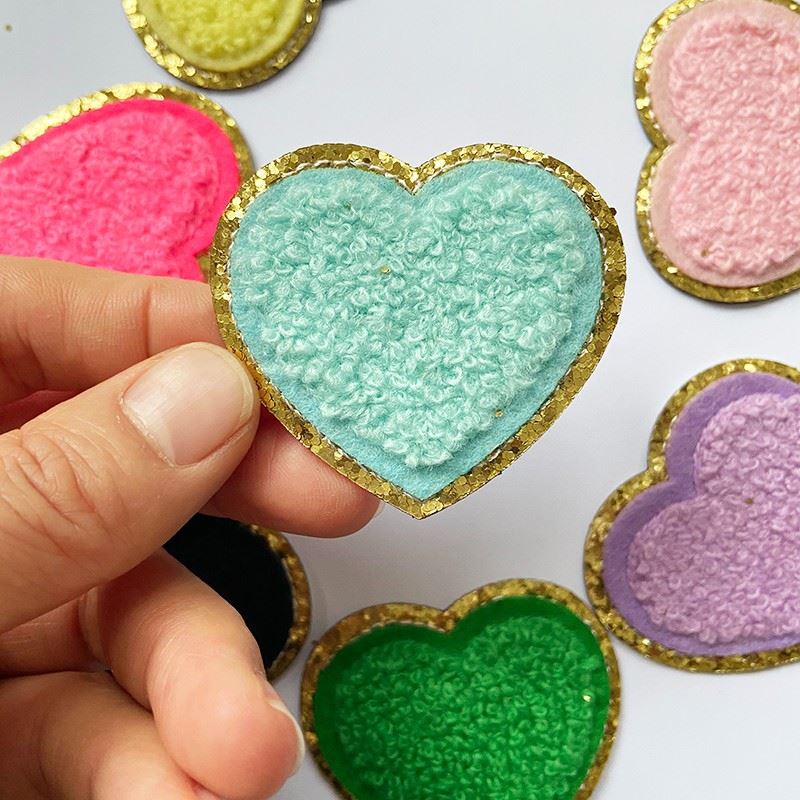
Next up: installation method. How you attach a chenille patch is huge when it comes to both longevity and safety, especially because poorly installed patches can come loose. I’ve seen too many cases of patches falling off uniforms and ending up on workshop floors, playgrounds, or machinery—creating a choking hazard for kids or a entanglement risk for people working with equipment. That’s why we categorize our attachment options clearly, so customers can pick what’s right for their needs.
For example, our Sew On Chenille Embroidery Patch is the most secure option for high-movement settings. When a patch is hand-stitched or machine-stitched properly onto fabric (we use heavy-duty nylon thread that’s tested for abrasion resistance), it’s not going to come loose, even with repeated washing, dragging, or rough play. I always recommend this for youth sports teams, construction crews, and marching bands—groups where gear is going to take a beating. The downside is that it requires basic sewing skills or a machine, but the payoff is zero risk of loose patches becoming a hazard.
Then there’s the Iron On Chenille Embroidery Patch, which is super popular for people who want a quick, easy application. But here’s where safety notes come in that I never skip: iron-on adhesive (usually a heat-activated vinyl or glue) works best when applied correctly, at the right temperature, and to the right fabric. If you use too high a heat, you can scorch the underlying fabric, which weakens it and could even cause small burns if someone is holding the patch wrong mid-application. If you apply it to fabric that’s not heat-resistant (like nylon in high heat), it can melt through, leaving a hole and a weakened spot. Also, I always tell customers to avoid iron-on patches on clothes that go through a commercial dryer on high heat—over time, the adhesive can break down, leading to loose patches. I recently had a group of high school cheerleaders come back to us because their iron-on patches had started peeling after a month of practice, and the problem was they were washing them with hot water and drying them on high. We switched them to sew-on patches, and they haven’t had an issue since.
The third attachment option is our Stick On Chenille Embroidery Patch, which uses a pressure-sensitive adhesive (PSA) on the back. This is great for temporary uses—like a one-event sports jersey, a costume, or a promotional item you don’t want to ruin with sewing or ironing. But PSA patches are not for long-term use, and they’re definitely not for high-movement work gear. The adhesive can leave a residue on fabric, and if a patch falls off (which it will eventually, especially if it gets wet or dirty), you have the same choking or entanglement risk as loose sew-on patches. I always make sure to flag this limitation to customers so they don’t use stick-on patches for situations where safety is a priority.
Another less obvious safety concern is the size of the patch. I’ve had customers order huge chenille patches for youth t-shirts, and that’s a problem for two reasons. First, large patches cover more of the fabric, which can make the garment weaker—especially if you’re sewing or ironing a big area. A weak spot in a kid’s hoodie or jacket can tear, leading to a hazard. Second, oversized patches can get caught on playground equipment, door handles, or machinery. I recommend keeping patches proportional to the garment: for a kids’ t-shirt, a 3-inch patch is more than enough; for a work jacket, 4 inches max. We now include a size guide on every product page that emphasizes this, and we’ll even push back on a customer if we think their requested patch size is too big for the intended use. It might feel like we’re being annoying, but I’d rather they be safe than have to come back to us with a problem.
What about for people with allergies? That’s another question I get a lot. Chenille yarn is usually polyester, which is a synthetic material, so natural fiber allergies (like wool or cotton) don’t usually apply, but some people are allergic to the adhesives used in iron-on or stick-on patches. We test all our adhesives for low toxicity, but we do offer an alternative for people with severe skin sensitivities: our sew-on patches, which have no adhesive at all. All our materials are also OEKO-TEX certified, which means they’re free from harmful chemicals like lead, phthalates, and formaldehyde. That’s a big one for parents and teachers who are worried about what their kids are wearing.
Over the years, we’ve had to adapt our practices as new safety research comes out. A few years ago, we started noticing that some cheap chenille patches were being made with excess loose fibers that could be a choking hazard for toddlers. So we started trimming all patch edges with a tight overlock stitch to prevent loose fuzz from coming off, and we add a note to all orders for products going to daycares or toddler groups about checking patches regularly for signs of wear. It’s a small step, but it’s stopped so many potential issues before they start.
I also want to address the elephant in the room: counterfeit chenille patches. There are a lot of cheap, no-name suppliers out there selling patches made with low-quality yarn, toxic adhesives, and no safety testing. We’ve had customers come to us after buying a cheap batch from a random online marketplace, only to find that the patches melted when washed, peeled off after a week, or even had loose threads that their kid pulled off and almost choked on. That’s why it’s so important to buy from a reputable supplier who prioritizes safety over cutting corners. All our patches go through multiple quality checks before they ship, and we keep records of all our material certifications so customers can ask for them if they need.
At the end of the day, chenille patches are meant to be a fun, durable way to show team spirit, brand identity, or pride. The safety concerns aren’t about the patches themselves—they’re about the choices we make when choosing materials, attachment methods, and sizes. As a supplier, our job isn’t just to sell patches; it’s to make sure our customers have all the information they need to use them safely.
If you’re in the market for chenille patches for your team, business, or event, we’re here to help. We can walk you through the different attachment options, recommend the safest choice for your specific use case, and answer any questions you have about materials, safety standards, or sizing. Just reach out to our team to start a conversation about your project.
References
- National Fire Protection Association. (2021). NFPA 701: Standard Methods of Fire Tests for Flame Propagation of Textiles and Films. Quincy, MA: National Fire Protection Association.
- OEKO-TEX Association. (2023). OEKO-TEX Standard 100: Testing and Certification for Textiles. Zurich, Switzerland: OEKO-TEX International.
- U.S. Consumer Product Safety Commission. (2022). Choking Hazards From Small Parts in Children’s Apparel and Toys. Washington, D.C.: U.S. CPSC.